
Quick Answer
Clear aligners and traditional braces both straighten teeth effectively, but they suit different needs. When weighing clear aligners versus traditional options in Exeter, ON, the right choice depends on the complexity of your bite, your daily habits, and your commitment to wearing them. At Exeter Dental, our team explains both paths in plain language so you can decide with confidence.
Patients walk into our Exeter office with plenty of questions, and a fair share of myths, about straightening their teeth. Some believe clear aligners work overnight. Others assume braces are only for teenagers. This guide tackles those real-world questions directly, clearing up the confusion around clear aligners versus traditional options for patients in Exeter, ON. Consequently, you will leave with straight answers rather than marketing hype.
Clear Aligners vs Traditional Braces: What Is the Real Difference?
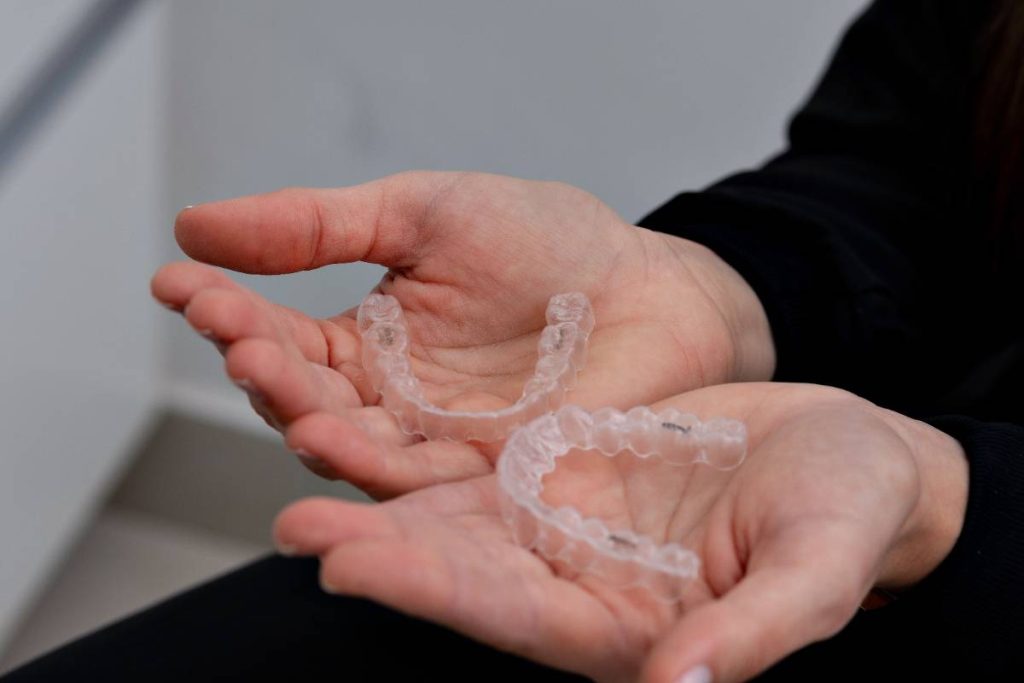
Clear aligners are removable, transparent trays that shift your teeth gradually, while traditional braces use fixed brackets and wires. Both apply gentle, controlled pressure over time. However, they differ in visibility, comfort, and daily upkeep.
Aligners appeal to adults who want a discreet option. Furthermore, you remove them to eat and brush, which keeps oral hygiene simpler. Traditional braces, by contrast, stay fixed and can handle more complex rotations and spacing issues. At Exeter Dental, we assess your bite first, then recommend the approach that genuinely fits your case rather than a one-size-fits-all fix.
Myth: “Clear Aligners Only Work on Minor Problems”
This is partly outdated. Modern aligner systems now correct many crowding and spacing concerns that once required brackets. Nevertheless, severely rotated teeth or major bite corrections may still respond better to fixed appliances. Consequently, a proper clinical exam matters far more than any online quiz or influencer claim.
Common Questions About Clear Aligners in Exeter, ON
Patients ask three questions most often: do they hurt, how long do they take, and will I need a retainer afterward? Here are honest answers.
First, mild pressure is normal for a day or two after switching trays; sharp pain is not. Additionally, treatment time varies widely, typically several months to over a year, depending on your starting point. Finally, yes, retainers are essential. Teeth naturally drift back, so we provide custom retainers to protect your results. Skipping this step is the most common reason people lose their straightened smile.
Myth: “Once My Teeth Are Straight, I’m Done Forever”
Unfortunately, no. Retention is a lifelong commitment for everyone, whether you chose aligners or braces. Specifically, wearing your retainer as directed keeps your investment intact. Our team teaches you exactly how and when to wear it, because patient education sits at the heart of how we practice.
How Do You Choose Between the Two?
Start with a professional evaluation rather than guesswork. According to the Canadian Dental Association, orthodontic decisions should be based on a full assessment of your teeth, gums, and bite alignment. Therefore, we review digital images, examine your gum health, and discuss your lifestyle before recommending anything.
Discipline is a real factor. Aligners work only when worn 20 to 22 hours a day. If you know you will forget to put them back in, fixed braces might serve you better. Moreover, we consider your periodontal health first; healthy gums and stable teeth are the foundation for any tooth movement. You can review the full range of treatments on our services page to see how orthodontic care fits alongside our preventive and restorative options.
Busting the “Aligners Damage Your Teeth” Myth
When supervised properly, neither aligners nor braces harm healthy teeth. Problems arise from unsupervised mail-order kits, not professionally managed treatment. The Royal College of Dental Surgeons of Ontario emphasizes that tooth movement should always be overseen by a qualified dental professional. Consequently, direct-to-consumer trays without in-person monitoring carry genuine risks to your enamel and gums.
Cost, Coverage, and the CDCP
Cost concerns hold many patients back, so let us address them plainly. Fees depend on case complexity and treatment length, not simply the appliance type. Additionally, Exeter Dental accepts the Canadian Dental Care Plan (CDCP), which helps eligible patients access care they might otherwise delay. We walk you through estimates before treatment begins, so there are no surprises later.
Frequently Asked Questions
Are clear aligners as effective as traditional braces?
For many cases, yes. Aligners correct a wide range of crowding and spacing issues. However, complex bite problems may still respond better to fixed braces, which is why an in-person exam guides the decision.
Can I switch from braces to clear aligners partway through?
Sometimes, depending on your progress. Your dentist will review your current alignment and gum health first. Consequently, any change is made only when it genuinely benefits your outcome.
Do clear aligners cause a lisp?
A brief adjustment period is common, and speech usually returns to normal within days. Additionally, practicing speaking aloud speeds up the transition.
Will I need a retainer with either option?
Yes. Retainers protect your final result regardless of which method you choose. Teeth naturally drift, so lifelong retention keeps your smile stable.
Ready to Get Clear Answers?
Straightening your teeth should start with facts, not myths. If you are comparing clear aligners versus traditional options in Exeter, ON, our team is ready to assess your smile and explain your real choices. Contact Exeter Dental today to book a consultation at our office on Main Street North.